

How does an electric catering oven's temperature sensor work?
Sep 28, 2026
In the world of commercial catering, having precise temperature control in ovens is crucial for delivering consistent and high - quality food products. As a leading supplier of Electric Catering Ovens, I've witnessed firsthand the importance of a well - functioning temperature sensor. In this blog, I'll delve into how an electric catering oven's temperature sensor works.

The Basics of Temperature Sensors in Electric Catering Ovens
Temperature sensors are the unsung heroes of electric catering ovens. They are responsible for measuring the temperature inside the oven cavity and relaying this information to the oven's control system. This feedback loop is essential for maintaining the desired cooking temperature, ensuring that your baked goods, roasted meats, or other culinary creations come out perfectly every time.
There are several types of temperature sensors commonly used in electric catering ovens, including thermocouples, resistance temperature detectors (RTDs), and thermistors. Each type has its own unique characteristics and advantages.
Thermocouples
Thermocouples are perhaps the most widely used temperature sensors in commercial ovens. They work based on the Seebeck effect, which states that when two different metals are joined at two junctions and there is a temperature difference between the junctions, an electric voltage is generated. In a thermocouple, one junction is placed inside the oven cavity (the measuring junction), while the other is kept at a known reference temperature (the reference junction).
The voltage generated by the thermocouple is proportional to the temperature difference between the two junctions. By measuring this voltage, the oven's control system can determine the temperature inside the oven. Thermocouples are known for their wide temperature range, fast response time, and durability. They can withstand high temperatures and are relatively inexpensive, making them a popular choice for many commercial applications.
Resistance Temperature Detectors (RTDs)
RTDs are another type of temperature sensor used in electric catering ovens. They operate on the principle that the electrical resistance of a metal changes with temperature. Most RTDs are made of platinum, which has a very stable and predictable resistance - temperature relationship.
As the temperature inside the oven changes, the resistance of the RTD also changes. The oven's control system measures this resistance and uses it to calculate the temperature. RTDs are known for their high accuracy and stability, making them ideal for applications where precise temperature control is required. However, they are generally more expensive than thermocouples and have a slower response time.
Thermistors
Thermistors are temperature - sensitive resistors whose resistance changes significantly with temperature. They are typically made of semiconductor materials and can be either negative temperature coefficient (NTC) or positive temperature coefficient (PTC) thermistors.
NTC thermistors are the most commonly used type in electric catering ovens. As the temperature increases, the resistance of an NTC thermistor decreases. The oven's control system measures this change in resistance to determine the temperature. Thermistors are relatively inexpensive and have a high sensitivity, but they have a limited temperature range compared to thermocouples and RTDs.
How the Temperature Sensor Interacts with the Oven's Control System
Once the temperature sensor measures the temperature inside the oven, it sends this information to the oven's control system. The control system then compares the measured temperature with the set temperature (the temperature that the user has selected on the oven's control panel).
If the measured temperature is lower than the set temperature, the control system will activate the heating elements in the oven to increase the temperature. Conversely, if the measured temperature is higher than the set temperature, the control system will turn off the heating elements or activate the cooling system (if the oven is equipped with one) to lower the temperature.
This continuous feedback loop ensures that the temperature inside the oven remains as close as possible to the set temperature, providing consistent cooking results. The control system may also use additional features such as proportional - integral - derivative (PID) control to fine - tune the temperature regulation and minimize temperature fluctuations.
Importance of a Reliable Temperature Sensor
A reliable temperature sensor is essential for the proper operation of an electric catering oven. Here are some reasons why:
- Consistent Cooking Results: Precise temperature control ensures that your food is cooked evenly and to the desired level of doneness. Whether you're baking a batch of cookies or roasting a turkey, a reliable temperature sensor helps you achieve consistent results every time.
- Food Safety: Maintaining the correct temperature is crucial for food safety. Certain foods need to be cooked at specific temperatures to kill harmful bacteria and ensure that they are safe to eat. A malfunctioning temperature sensor could lead to undercooked or overcooked food, posing a risk to consumers.
- Energy Efficiency: An accurate temperature sensor helps the oven operate more efficiently. By maintaining the correct temperature, the oven can avoid over - heating or under - heating, which can waste energy and increase operating costs.
Our Range of Electric Catering Ovens
As a supplier of Electric Catering Ovens, we offer a wide range of products to meet the diverse needs of our customers. Our Commercial Electric Convection Oven is designed for high - volume baking and roasting. It features a powerful convection system that circulates hot air evenly throughout the oven cavity, ensuring fast and consistent cooking.
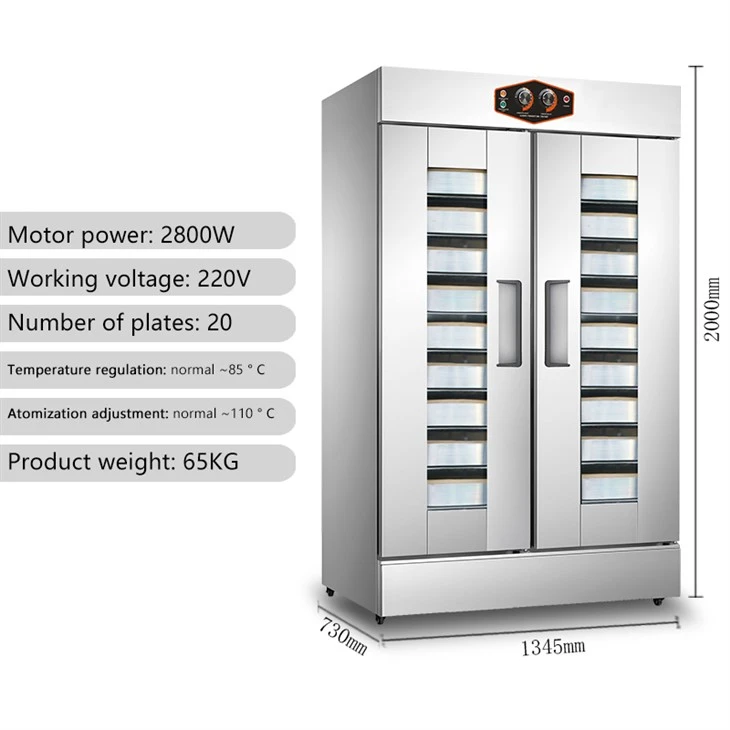
Our Commercial Proofer Cabinets are ideal for proofing bread and other dough products. They provide a controlled environment with the right temperature and humidity to promote proper fermentation.
And our Conveyor Toaster is perfect for quickly toasting a large number of items, such as bagels, sandwiches, and pastries. It offers adjustable speed and temperature settings to suit different types of food.
Contact Us for Your Catering Oven Needs
If you're in the market for an electric catering oven, we'd love to hear from you. Our team of experts can help you choose the right oven for your specific needs and provide you with all the information you need to make an informed decision. Whether you're a small bakery, a large restaurant, or a catering service, we have the perfect solution for you.
References
- "Temperature Sensors: Principles and Applications" by John G. Webster
- "Commercial Oven Technology" by the National Restaurant Association Educational Foundation