

What is the optimal drying condition for rubber products in a commercial moisture oven?
Sep 29, 2025
Drying rubber products is a critical step in the manufacturing process, as it directly impacts the quality, durability, and performance of the final product. As a supplier of Commercial Moisture Oven, I have witnessed firsthand the importance of finding the optimal drying conditions for rubber products. In this blog post, I will delve into the factors that influence the drying process and provide insights on how to determine the best drying conditions for rubber products in a commercial moisture oven.
Understanding the Drying Process of Rubber Products
Rubber products often contain a certain amount of moisture, which can come from various sources such as the raw materials, the manufacturing environment, or the processing steps. Excess moisture in rubber products can lead to a range of issues, including reduced mechanical properties, increased susceptibility to mold and mildew, and poor adhesion. Therefore, it is essential to remove the moisture to an acceptable level through the drying process.
The drying process of rubber products involves the transfer of moisture from the interior of the rubber to the surface and then into the surrounding air. This process is driven by the difference in moisture content between the rubber and the air, as well as the temperature and airflow in the drying environment. The rate of moisture transfer depends on several factors, including the type of rubber, the thickness of the product, the initial moisture content, and the drying conditions.
Factors Affecting the Drying of Rubber Products
Type of Rubber
Different types of rubber have different moisture absorption and desorption characteristics. For example, natural rubber has a relatively high moisture absorption capacity compared to synthetic rubbers such as neoprene or silicone. This means that natural rubber products may require longer drying times or more aggressive drying conditions to achieve the desired moisture content.
Thickness of the Product
The thickness of the rubber product also plays a significant role in the drying process. Thicker products have a larger volume of moisture to remove, and the moisture has to travel a longer distance from the interior to the surface. As a result, thicker rubber products generally require longer drying times than thinner ones.
Initial Moisture Content
The initial moisture content of the rubber product is another important factor. Products with a higher initial moisture content will take longer to dry than those with a lower moisture content. It is important to measure the initial moisture content accurately to determine the appropriate drying time and conditions.
Drying Conditions
The drying conditions, including temperature, humidity, and airflow, have a direct impact on the drying rate and the quality of the final product.
- Temperature: Increasing the temperature generally increases the drying rate, as it provides more energy for the moisture to evaporate. However, excessive temperature can also cause damage to the rubber, such as degradation, discoloration, or loss of elasticity. Therefore, it is crucial to select an appropriate temperature that balances the drying rate and the quality of the rubber.
- Humidity: The humidity of the surrounding air affects the moisture gradient between the rubber and the air. Lower humidity levels create a larger moisture gradient, which promotes faster moisture transfer. In a commercial moisture oven, it is often necessary to control the humidity to ensure efficient drying.
- Airflow: Adequate airflow is essential for removing the moisture from the surface of the rubber and preventing the buildup of moisture in the oven. Good airflow helps to maintain a uniform temperature and humidity distribution in the oven, which ensures consistent drying across all the products.
Determining the Optimal Drying Conditions
To determine the optimal drying conditions for rubber products in a commercial moisture oven, a systematic approach is required. Here are the steps involved:
Step 1: Analyze the Rubber Product
- Identify the type of rubber used in the product.
- Measure the thickness of the product.
- Determine the initial moisture content of the product using a moisture meter.
Step 2: Conduct Preliminary Tests
- Set up a series of drying tests using different temperature, humidity, and airflow settings.
- Monitor the drying process closely and record the time required to reach the desired moisture content for each test.
- Evaluate the quality of the dried products, including their appearance, mechanical properties, and performance.
Step 3: Optimize the Drying Conditions
- Based on the results of the preliminary tests, identify the combination of temperature, humidity, and airflow that provides the fastest drying time while maintaining the quality of the rubber product.
- Make adjustments to the drying conditions as needed to optimize the process further.
Step 4: Validate the Optimal Conditions
- Conduct additional tests using the optimized drying conditions to ensure consistency and reproducibility.
- Compare the results of the validation tests with the desired specifications to confirm that the optimal conditions have been achieved.
Benefits of Using a Commercial Moisture Oven
Using a commercial moisture oven offers several advantages for drying rubber products:
- Precise Temperature and Humidity Control: Commercial moisture ovens are equipped with advanced temperature and humidity control systems, which allow for precise adjustment of the drying conditions. This ensures consistent and uniform drying across all the products, resulting in high-quality finished products.
- Uniform Airflow: These ovens are designed to provide uniform airflow throughout the drying chamber, which helps to prevent the formation of hot spots and ensures that all parts of the rubber product are dried evenly.
- Energy Efficiency: Modern commercial moisture ovens are designed to be energy-efficient, which helps to reduce operating costs and minimize the environmental impact.
- Safety Features: Commercial moisture ovens are equipped with safety features such as over-temperature protection and automatic shut-off, which ensure the safety of the operators and the products.
Other Related Equipment
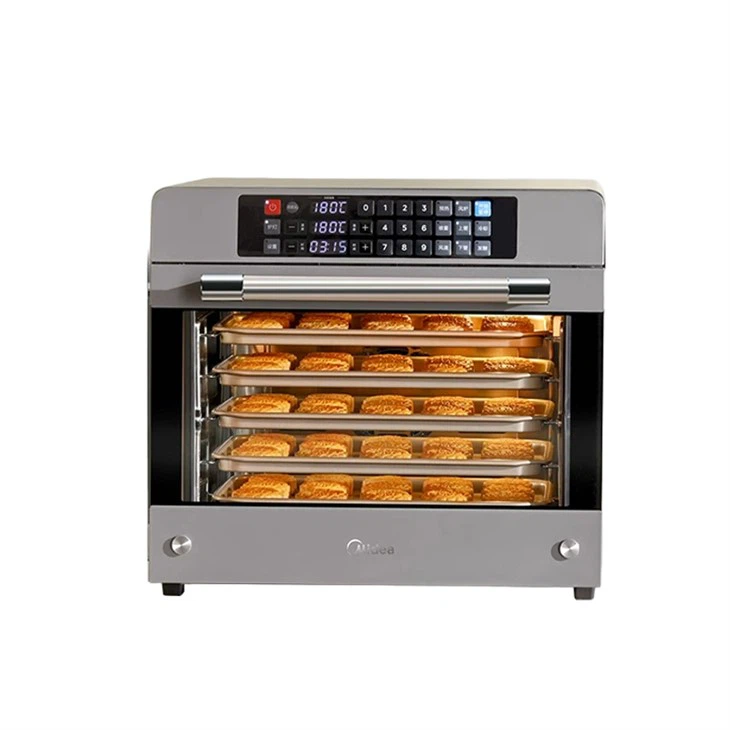
In addition to Commercial Moisture Oven, other types of equipment may also be useful in the rubber manufacturing process. For example, Electric Catering Oven can be used for preheating or curing rubber products, while Commercial Proofer Cabinets can be used for proofing or conditioning rubber compounds.

Conclusion
Finding the optimal drying conditions for rubber products in a commercial moisture oven is a complex process that requires careful consideration of several factors. By understanding the factors that affect the drying process and following a systematic approach to determine the optimal conditions, manufacturers can ensure that their rubber products are dried efficiently and effectively, while maintaining their quality and performance.
If you are interested in learning more about our Commercial Moisture Oven or discussing your specific drying needs, please feel free to contact us. Our team of experts is ready to assist you in finding the best solution for your rubber drying requirements.
References
- ASTM D4442 - Standard Test Methods for Moisture Content of Wood and Wood-Based Materials
- ISO 24338 - Rubber - Determination of moisture content
- R. A. Merkel, "Drying of Polymers: Principles and Practice", Hanser Publishers, 2002